Afterword
The World of 1782
The events of this novel take place during one of the most volatile and “shadowy” periods in American history. While the British surrender at Yorktown in October 1781 is often viewed as the end of the Revolutionary War, for the people of the Virginia Tidewater, the year 1782 was defined by a “long, cold peace.”
The “Intelligence of Instant Importance”
As Niall and Clarice discover in the final chapter, the news of the British Parliament declaring the United States independent reached American shores in fragments. It was not until the Rockingham Ministry took power in London that the true path to the Treaty of Paris (1783) began. The war-weary citizens of Williamsburg lived in a state of hyper-vigilance, surrounded by the physical ruins of the conflict and the constant presence of French and Continental troops.
The Legal Landscape of the Widow
Clarice’s struggle to keep Farview is a direct reflection of Common Law and Coverture. In the 1780s, a married woman had no legal identity separate from her husband. Upon Andrew's death, Clarice became a femme sole, finally able to own property and sign contracts. However, the “widow’s third” and the burden of a husband's debts often forced women into poverty or quick remarriages. Andrew's decision to leave his estate to Clarice “without conditions” was an act of radical generosity for the period, granting her a level of freedom few women in the 18th century ever knew.
The Medical Reality
The wounds sustained by Niall McLane—lacerations from bear claws, a fractured arm, and a deep shoulder stab—would have been a death sentence in many cases. The “catgut” sutures Clarice used were a known medical technique, but the true heroes of 18th-century medicine were often women like Sibby. Midwives and enslaved healers held a deep knowledge of botanical medicine, using local roots and herbs to treat “suppurating” wounds and “fevered limbs” long before the advent of modern germ theory.
Ultimately, the story of Niall and Clarice is a testament to the resilient spirit that defined a burgeoning nation. As the smoke cleared from the ruins of the old world, survivors like them stood upon the threshold of an era where “Independence” was more than a political decree—it was a personal reclamation of the heart. Though they bore the scars of a brutal conflict, they represented the enduring promise of the American experiment: that from the ashes of discord and the weight of the past, a new life could be cultivated through courage and devotion. As the sun rose over the emerald tobacco fields of a peaceful Farview, it heralded a future no longer dictated by fate or fear, but by the quiet, triumphant strength of those who dared to start again.

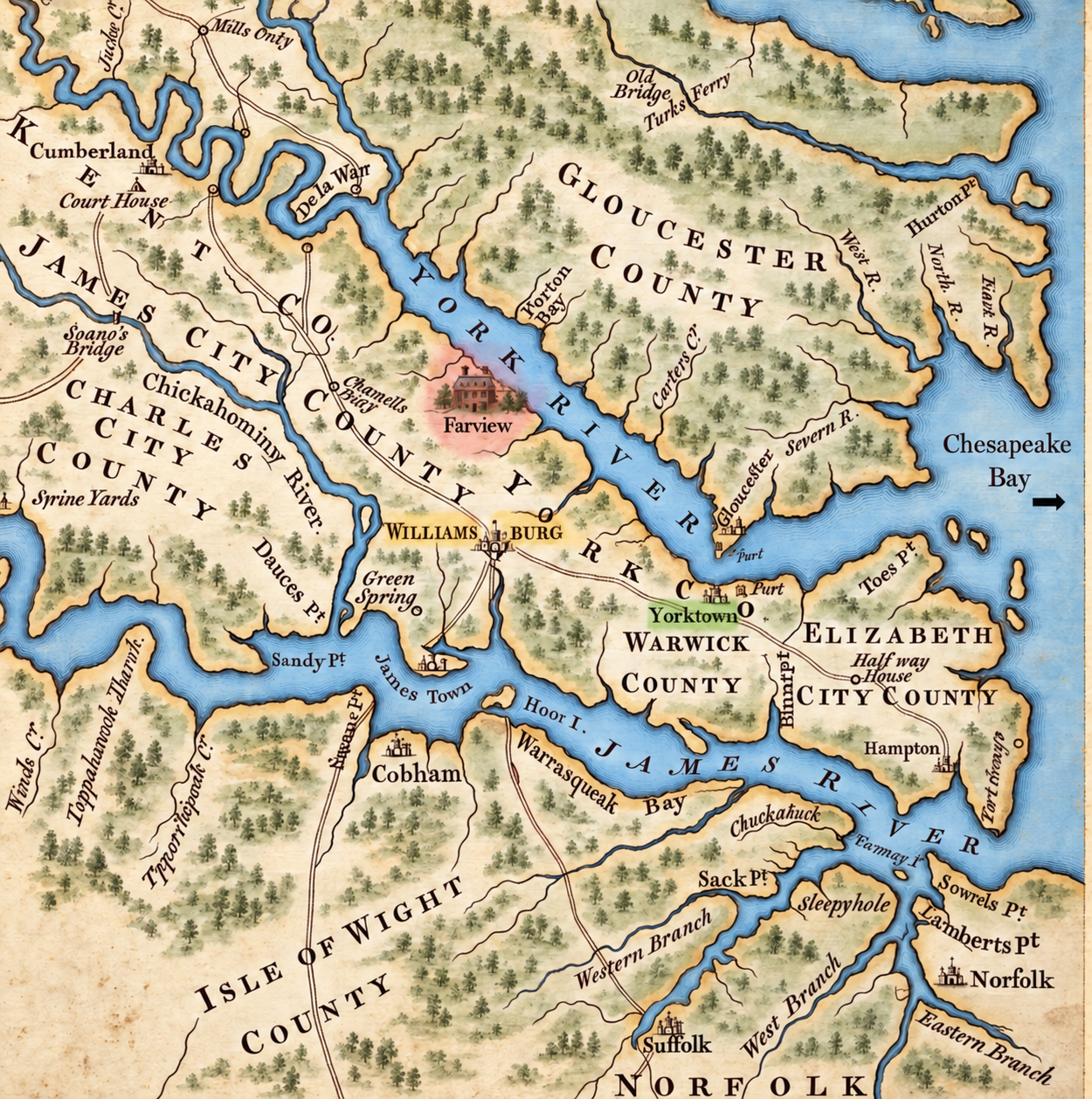
Williamsburg, Virginia and Its Environs, 1781
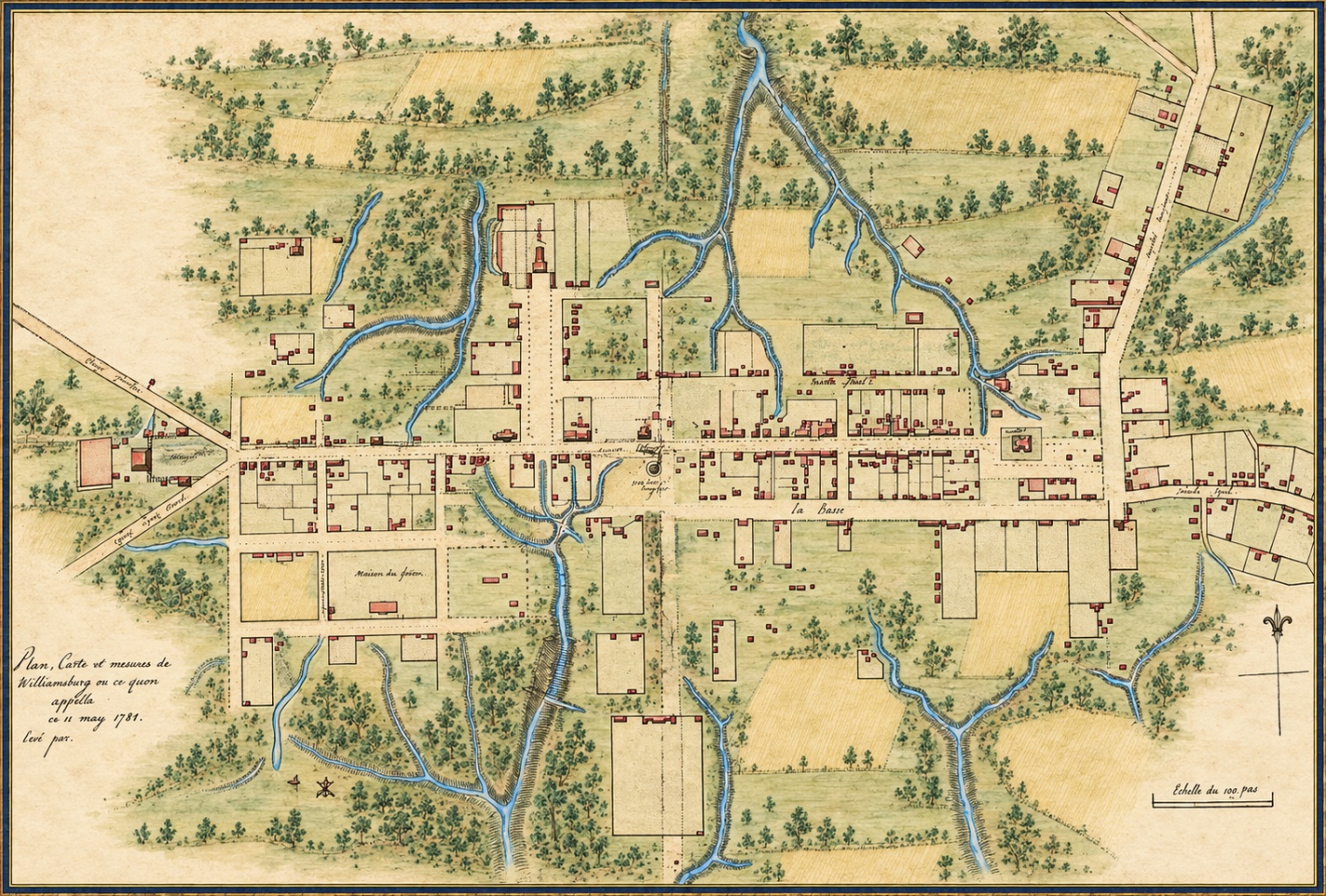
The Frenchman’s Map
The Frenchman’s Map played an invaluable role in the restoration of present-day Colonial Williamsburg. Discovered between the pages of an old book, the map was most likely drawn when French troops, fresh from victory at the Siege of Yorktown, established winter quarters in and around Williamsburg in November 1781. Like a lot of French military cartography of the period, the map is very detailed, drawn to scale by a skilled hand. The identity of the “Frenchman” who created it remains a mystery.
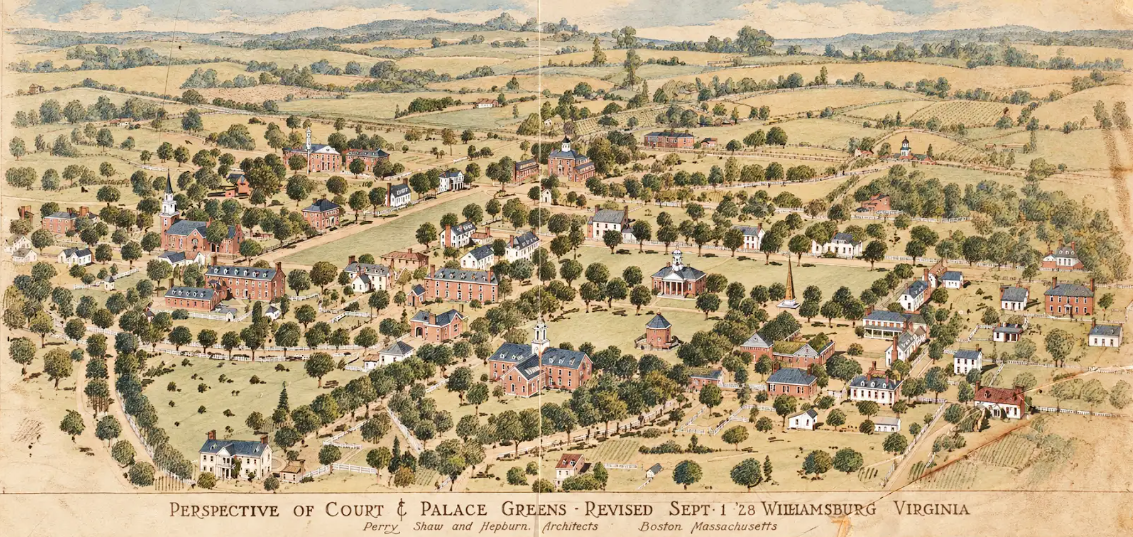
Sketch of Restored Court & Palace Greens with Their Surroundings
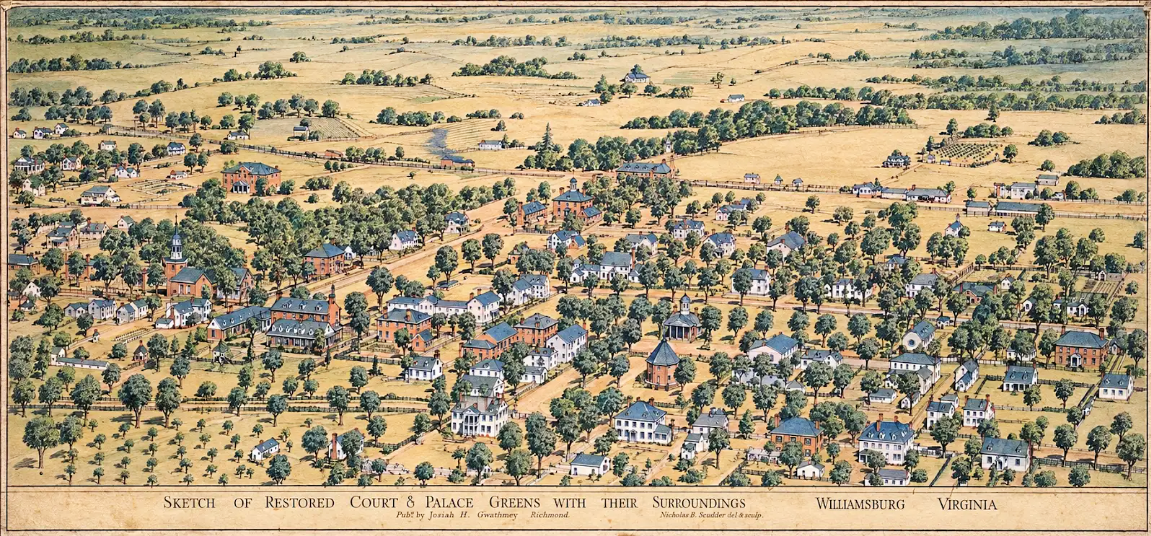
Perspective of Court & Palace Greens
The Palace Carriage House, c. 1781